
Aluminum vs Stainless Steel for Rapid Prototyping in China: A Decision Table That Respects Your Schedule
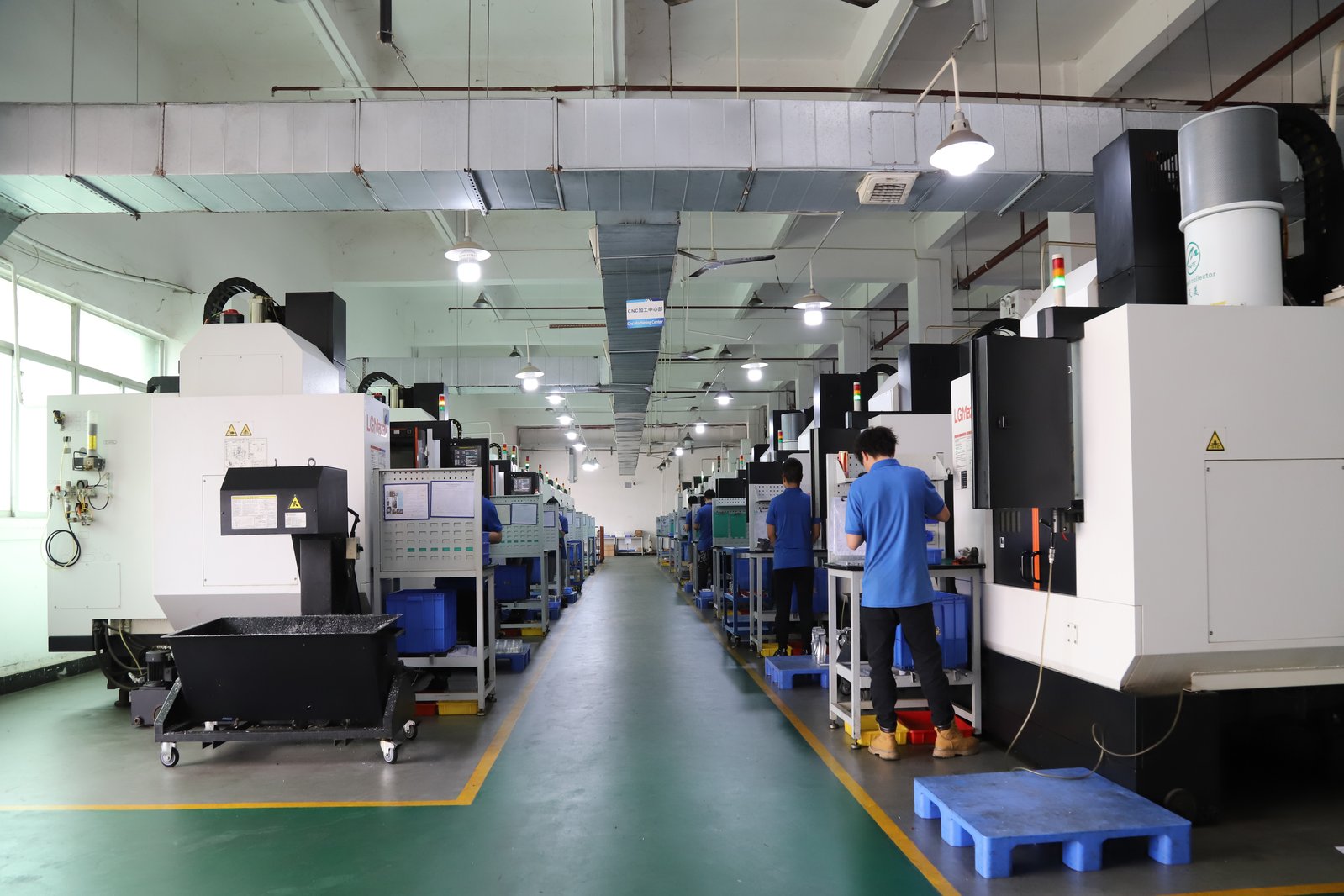
On a rapid-prototyping order, the metal choice is a schedule decision before it is a performance decision. Aluminum 6061-T6 and stainless 304 will both machine the geometry on your drawing, and both will carry the loads many prototypes need to prove. What they will not do is cost the same time. Aluminum cuts fast and wears tools slowly, so it belongs to the fast tiers of a prototyping schedule; stainless cuts slower, holds heat at the edge, and pushes the same geometry toward the longer end of the calendar. When your whole reason for prototyping in China is to compress the distance between a drawing and a decision, the question is not which metal is stronger but which metal gets you the learning you need by the date you have. This guide sets the aluminum-versus-stainless decision inside the rapid-prototyping timeline: where each metal sends your part in the 3 / 7 / 30-day tier system, what each one lets you verify, and when paying the stainless time premium is the honest choice. A decision table at the end turns the argument into a call you can make at the RFQ.
Why does the aluminum-versus-stainless question look different on a rapid-prototyping schedule than on a production drawing?
A production material decision optimizes for the part's service life: the corrosion environment it will live in, the loads it will carry for years, the way it will be cleaned and maintained. A prototyping material decision optimizes for a different object — the learning you need before the production drawing is frozen. The two goals pull in opposite directions, which is why the metal that wins the prototype is not always the metal that will win production.
On a rapid-prototyping schedule the dominant variable is iteration speed. A prototype is a question asked of the physical world — does this geometry assemble, does this wall flex too much, does this heat sink run cool enough — and the schedule is the cost of each answer. Aluminum answers fast: it machines quickly, holds most prototype tolerances without drama, and comes back in days rather than weeks. Stainless answers slowly: the same geometry takes more machining minutes, and the same part slides toward the 7- or 30-day tier because the material itself fights the cutter. A buyer running three design iterations has three chances to learn in aluminum in the time one stainless iteration would take. That arithmetic is the entire rapid-prototyping case for aluminum, and it holds until the question you need answered can only be answered in stainless.
None of this argues that stainless is a bad prototyping material. It argues that stainless is a material with a schedule cost, and the cost should be spent only when the prototype's purpose requires the actual production material, not as a default that quietly triples the time to your first answer.
What does each metal actually do to your place in the 3 / 7 / 30-day tiers?
Rapid-prototyping shops organize their schedules into complexity tiers — roughly 3 days for simple parts, 7 days for standard parts with multiple operations, and 30 days for complex parts that run many process steps or carry surface finishing and heat treatment. Material choice moves a part through those tiers because it sets machining time and decides whether secondary steps sit inside the calendar. The factory behind this site routes work through exactly this tier system, and the metal on the drawing is one of the first things that decides the tier.
- Aluminum 6061-T6 keeps you in the fast lanes. It is the reference metal for machinability: it cuts fast, wears tools slowly, and holds tolerances without special tooling. A simple aluminum bracket is a 3-day part; an aluminum part with a second operation and a finish can still hold the 7-day tier. Aluminum anodizing adds a batch step, but it is a standard, well-understood leg of the schedule rather than an open question.
- Stainless 304 pushes the same geometry toward the longer tiers. It cuts slower and wears tools faster, so the identical bracket costs more machining minutes in 304 than in 6061-T6. On a milled geometry, stainless is where the material fights back — the machining is slower, the tooling budget is real, and a part that would have been a 3-day aluminum job is realistically a 7-day stainless job before any finishing is added.
- Secondary steps add their own time in either metal, but they load differently. Stainless parts more often need passivation or electropolishing for the corrosion and cleanliness the grade exists to provide, and those are batch processes that add days. Aluminum's anodize step is comparable in calendar terms; the difference is that aluminum reaches the anodize step faster because the machining ahead of it was faster.
The practical read: if your prototype has no reason to be stainless, aluminum is the material that respects your date. If the part must be stainless — a corrosion test, a wash-down validation, a material-properties check — plan for the tier shift and tell the shop the date matters, because the schedule cost of stainless is real and should be spent deliberately.
What can each metal actually verify in a prototype, and what can it not?
The metal you prototype in defines what the test proves. This is where the aluminum-versus-stainless decision stops being about speed and becomes about the validity of your learning:
- Form, fit, and assembly — aluminum proves them honestly. Dimensional relationships, hole positions, wall clearances, and how parts go together do not care which metal they are cut in. An aluminum prototype of a stainless production part is a faithful answer to every geometry question, and it delivers that answer at the fast-tier price.
- Machining behavior of the production material — only stainless proves it. If your production part is 304, an aluminum prototype tells you nothing about how 304 will cut: where it will work-harden, where the finishing pass will fight, where the deep pocket will chatter. If the risk in your program is manufacturability of the stainless geometry, the first stainless parts have to be cut in stainless, even at the schedule cost.
- Corrosion, cleaning, and material response — aluminum cannot stand in. A stainless part destined for wash-down duty, food contact, or a corrosive environment cannot be validated in aluminum, because the property under test belongs to the metal. Passivation behavior, surface response to cleaning chemistry, and corrosion resistance are stainless questions that only stainless parts answer.
- Weight and stiffness — the metals disagree on purpose. Aluminum is roughly a third of the weight of stainless for the same volume, which is usually a feature in handheld and moving prototypes. But aluminum's stiffness is also lower, so a thin-wall stiffness test done in aluminum understates what stainless would do, and a wall that flexes in an aluminum prototype may be perfectly rigid in the stainless production part.
The discipline is to name what the prototype must prove before choosing the metal. A prototype that exists to check geometry is an aluminum job. A prototype that exists to de-risk stainless machining is a stainless job from the start. Prototyping in the wrong metal either wastes the schedule or, worse, produces a "successful" test that validated nothing about the part you will actually ship.
How do surface finish and treatment change the schedule and the size budget in each metal?
Prototypes rarely ship raw; they carry a finish that signals how the production part will look and behave. The two metals take different finish paths, and each path has a schedule and a dimensional consequence.
Aluminum is finished by anodizing, and anodizing grows the surface. The oxide coating builds roughly as much above the original surface as below it, so a treated feature gains size that a post-coat tolerance must accommodate. On a prototype this matters in two ways: the anodize step is a batch leg in the schedule, and the drawing must state whether critical dimensions are pre-coat or post-coat, or a bore that fit before anodizing binds after it. Ask which convention the shop will machine to before the parts run.
Stainless is finished by passivation, which removes free iron from the surface and restores the corrosion resistance the grade is specified for, and, unlike anodizing, it adds no measurable size. A passivated stainless prototype arrives at the dimensions the machine cut, with no coating budget to manage. Where cleanability or friction matters, electropolishing goes a step further, and it is a defined process step with its own days on the calendar. On finish callouts, name the Ra only where the prototype needs it — a fine finish on a surface no one will inspect adds schedule for no learning.
When should a rapid prototype be stainless even though aluminum is faster?
The honest answer to "why not just prototype in aluminum?" has a short list of reasons, and each one is a real schedule trade worth making:
- The prototype must survive its own test environment. Corrosion testing, sterilization validation, wash-down cycles, and chemical exposure are metal-specific. An aluminum stand-in fails the test for the wrong reason, or passes it without proving anything about the production material.
- The part is machining-risk-heavy in stainless. Thin walls, deep pockets, and fine internal features behave differently in 304 — work hardening, chatter, and tool wear are stainless failure modes that only stainless machining exposes. When manufacturability is the unknown, the first articles belong in the production material.
- Customer or regulatory review requires the production material. A design review, an audit, or a field test that must see the actual material cannot be satisfied by a stand-in, whatever the schedule says.
- The prototype doubles as early production. If the "prototype" is really the first articles of a production run — the same drawing, the same material, the same process — there is no separate prototyping decision to make. Run it in stainless from the start and let the first articles carry the learning.
In every other case — geometry validation, iteration, design exploration, packaging checks — aluminum is the material that gets you the answer faster, and speed is the entire value proposition of rapid prototyping. Choose stainless for the reasons above, not by habit.
Which metal should your rapid prototype use? A decision table for the RFQ
The argument compresses into one table. Read down the left column for the purpose of your prototype; the middle columns say what each metal delivers; the last column names the metal that respects your schedule for that purpose.
| Prototype purpose | 6061-T6 aluminum | 304 stainless | Which respects your schedule, and why |
|---|---|---|---|
| Form, fit, and assembly check | Fast machining, faithful geometry, fast-tier delivery | Same geometry, slower machining, longer tier | Aluminum. Geometry answers are metal-independent, and aluminum answers them days sooner |
| Design iteration and exploration | Multiple rounds in the time one stainless round takes | Each round costs the full stainless schedule | Aluminum for iteration volume. Spend stainless time only when the design has stabilized |
| Machining-risk validation of a stainless part | Cannot expose work hardening, chatter, or tool-wear behavior | Reveals exactly how 304 will fight the geometry | Stainless. The first stainless parts must be cut in stainless to de-risk production |
| Corrosion, cleaning, or sterilization test | Wrong metal — the property under test is stainless's | Passivated or electropolished, tested in the real material | Stainless. Aluminum would fail the test for the wrong reason or pass without proving anything |
| Weight and stiffness check | Light, but less stiff — a thin wall flexes more than stainless would | About three times the weight of aluminum, but stiffer in thin sections | Test in the metal that matches the production requirement; the metal's behavior is the point |
| First articles that double as early production | Only if production is aluminum | Run the production material from the start | Whatever production will be. No separate prototyping decision exists once the run is real |
Read the table once more and the pattern is clear: aluminum wins every prototype purpose that is about geometry, iteration, and speed, and stainless wins every purpose that is about the metal itself — its machining behavior, its corrosion response, or its role as early production. The mistake is not choosing stainless for a stainless question. It is choosing stainless for a geometry question and paying the schedule cost for learning aluminum could have delivered days earlier.
How do you put the metal decision on the RFQ so the schedule is honest?
A rapid-prototyping RFQ should name the prototype's purpose as clearly as it names the metal, because purpose is what the supplier needs to route the part to the right tier. Three lines in the inquiry close the loopholes a vague RFQ leaves open:
1. Name the alloy and the prototype's goal. "Aluminum" is not a specification — write 6061-T6 and state whether the part is a geometry check or a functional test. "Stainless" is not a specification either — write 304 or 316, and say whether the test is corrosion, cleaning, or machinability. The supplier routes a geometry-check aluminum part to the fast tier and a corrosion-test stainless part to the schedule the passivation step demands, and both routes are correct.
2. State the finish and the size convention. If the prototype is anodized, say whether critical dimensions are pre-coat or post-coat. If it is passivated or electropolished, name the step so it sits in the schedule. The drawing's tolerance means nothing until everyone agrees which side of the coating it applies to.
3. Ask for the tier, not just the date. A prototyping shop that quotes in the 3 / 7 / 30-day tier language is showing you the schedule logic, which operations, which material penalties, which finishing steps are pushing your part. A shop that answers only "we can do it" has not priced the schedule, and the schedule is what you are buying. For the fuller picture of what moves a part through the tiers, the site's rapid prototyping in China guide walks the complete lead-time model, and the rapid prototyping services page shows how the process choice and the material choice are made together on the floor.
Frequently Asked Questions
Can I prototype in aluminum and then produce in stainless?
For geometry, yes — an aluminum prototype is a faithful answer to every form, fit, and assembly question. For machining behavior, no: aluminum will not tell you how 304 will work-harden, chatter, or wear tools on your geometry. If the production risk is machinability of the stainless part, run the first stainless parts in stainless even at the schedule cost.
Why does the stainless version of the same prototype take longer?
Because stainless cuts slower and wears tools faster than aluminum, the same geometry costs more machining minutes. On a milled part, stainless is where the material fights back, which is why a part that is a 3-day aluminum job is realistically a 7-day stainless job before finishing. The tier system exists to price exactly this difference.
When is stainless worth the slower schedule in a prototype?
When the prototype must survive its own test in the production material — corrosion, sterilization, wash-down, or chemical exposure — or when the machining behavior of stainless geometry is the risk buyers need to retire. In those cases the schedule cost is the price of a valid answer.
Does anodizing change the size of an aluminum prototype?
It does. The oxide coating grows roughly as much above the original surface as below it, so a treated feature gains size. On a prototype this means the drawing must state whether critical dimensions are pre-coat or post-coat, or a bore that fit before anodizing can bind after it.
Does passivation change the size of a stainless prototype?
No measurable size. Passivation removes free iron from the surface and restores corrosion resistance without adding a coating, so a passivated stainless part arrives at the dimensions the machine cut. Electropolishing, where cleanability matters, removes a small amount of material and should be named on the drawing.
Is aluminum strong enough for a functional prototype?
For most functional checks, yes — 6061-T6 is a structural alloy used in production parts, and a prototype that survives its test in 6061 is meaningful for form and load questions within aluminum's envelope. Where the test is about stainless's specific strength or corrosion performance, the prototype must be stainless.
Which stainless grade should a prototype use?
For corrosion and general service, 304 is the standard choice and the benchmark for the decision table. For marine and chemical environments, 316 adds molybdenum for corrosion resistance at a machining cost. Where machinability matters more than corrosion margin, 303 is the free-machining alternative — a pragmatic choice when the prototype is machining-heavy.
Need a prototype decision that respects both your geometry and your date?
Tell us what the prototype must prove and the date it has to meet — [email protected] or +86 13126536955. The reply names the metal, the schedule tier the part lands in, and what each metal would cost you in days.