
- Dongguan Zhuohang Ltd, founded 2005 — 6,800 m², 100+ employees, capacity that keeps lead times short.
- 100+ production machines; milling to 1300 × 700 × 600 mm, turning to Ø720 × 1280 mm — parallel capacity.
- ISO 9001 + IATF 16949 + ISO 14001 — certificates behind a trusted schedule.
- No. 8, Shuibian Songyuan Road, Hengli Town, Dongguan, Guangdong, China 523470.
How does the machine count make lead times fast?
Speed comes from parallelism, not from hurrying. With 100+ production machines — 3-axis (50+), 4-axis (20+), and 5-axis (20+) centers, 25+ lathes, and 7+ grinders — a job routes to the first open machine that fits it, and multiple jobs run side by side. A small shop queues its work; a real plant schedules it, and the difference is the lead time.
How does the facility support a fast turnaround?
The 6,800 m² floor holds the full metal-cutting range under one roof, so a part never leaves the building between operations — no transit, no third-party queue, no handoff delay. Milling runs to 1300 × 700 × 600 mm and turning to Ø720 × 1280 mm, so both small prototypes and large parts have a home on the same floor.
How does the workforce keep the schedule?
A stable, skilled workforce keeps a schedule because it removes the variability that causes rework. The plant employs 100+ people, over 80% skilled technicians, and over 60% with five to ten years at the company. Experience that stays is what turns a lead-time estimate into a commitment.
What certificates back the factory?

Three certificates, all issued to Dongguan Zhuohang Ltd: ISO 9001:2015 (116024/A/0001/UK/En), IATF 16949:2016 (131941/A/0001/SM/En), and ISO 14001:2015 (116024/B/0001/UK/En). The IATF 16949 scope excludes product design under Clause 8.3 — a build-to-print manufacturer, stated honestly. A supplier whose scope is honest is also one whose schedule you can trust.
How does the inspection bench keep parts moving?
Fast inspection keeps the schedule tight, because a part that is checked quickly and accurately ships quickly. The bench runs Hexagon GLOBAL S CMMs, vision measuring machines, a gear measuring center, a KEYENCE VK-X3000 laser microscope, a SURFCOM 1800D, XRF material analysis, hardness testers, and salt-spray and tensile testers — in-house verification that does not wait on an outside lab.
How does the factory take a part from prototype to production?
The same floor runs all three phases: a prototype at one piece, a pilot at low volume, then production at volume. Because the machines and process do not change, the lead time you measured on the prototype is the lead time you get at volume — no re-qualification, no re-sourcing, no schedule reset.
Which industries does the factory serve on schedule?
The factory machines parts for automotive, robotics, electronics, medical, and automation equipment, in aluminum, stainless steel, carbon and alloy steel, brass, copper, titanium, magnesium, and engineering plastics. Domestic and overseas customers together exceed 100, with annual output above 1,000,000 pieces — volume that proves the schedule discipline scales.
How do you read a machine list for schedule risk?
A machine list only matters if it maps to your part's process. The floor here breaks down like this:
| Machine type | Count | What it unlocks |
|---|---|---|
| 3-axis milling | 50+ | Parallel capacity for simple parts — the ~3-day tier |
| 4-axis milling | 20+ | Fewer setups on multi-face parts |
| 5-axis milling | 20+ | Complex geometry in fewer setups |
| CNC lathes | 25+ | Round parts that do not queue behind milling |
| Grinders | 7+ | Finish passes at ±0.002 mm |
The number to probe is the count behind your part's process, not the headline total. A plant with over a hundred machines but a single one that fits your part is a queue in disguise; a plant where several machines of the right type sit on the floor is the schedule you want. Mazak, Brother, Citizen, Star, and Tsugami machines give the floor that per-process depth.
What should you check when you audit a factory for a fast lead time?
A factory visit is a schedule check, not just a premises check. Five things to look for:
- How many machines of the right type are idle — idle capacity is what absorbs your job, not the headcount on a slide.
- Do the processes sit under one roof — a part that moves between buildings or vendors carries transit time and third-party queue.
- Is the inspection bench in-house — a factory that waits on an outside lab for a CMM report slips its own schedule.
- Who has been there long enough to know the parts — experienced operators remove the variability that causes rework and reschedules.
- Are the certificates issued to the entity you are buying from — check the name against the purchase order, not just the logo on the wall.
How does the layout of 6,800 m² shorten the internal flow?
A floor is a logistics system, not just a space. On 6,800 m², the machines are arranged so a part flows from cutting to finishing to inspection without doubling back across the building. Every meter a part travels between operations is a minute it is not being machined, and a layout that groups operations shortens that travel to nothing.
The layout also decides whether a part waits. When milling, turning, mill-turn, and grinding sit in the same building, a part that needs three processes moves three times and queues twice. When those processes sit in different buildings or different vendors, the same part moves and queues more, and each leg adds a handoff that can slip. One roof is the simplest capacity claim a factory can make, and the most testable.
Look for the flow, not the square footage. A big floor with processes scattered is worse than a small floor with processes adjacent, because the schedule is set by the path a part walks, not by the area the roof covers.
How does a certificate become a schedule discipline?
A certificate is often read as a wall decoration; it is actually a schedule commitment. ISO 9001:2015 (116024/A/0001/UK/En) forces documented processes and corrective action, which means a slip is investigated instead of repeated. IATF 16949:2016 (131941/A/0001/SM/En) forces a level of process control — SPC, traceability, contingency planning — that makes lead times predictable rather than lucky. ISO 14001:2015 (116024/B/0001/UK/En) forces environmental discipline that runs in the same documented rhythm.
The connection to your schedule is direct. A certified plant runs on procedures, not on memory, so the process that produced a fast prototype last month is the process that will produce it again this month. A plant without that discipline gives you whatever its best operator happened to do that day. Predictability is the product, and the certificate is the evidence the plant bought it.
The scope note matters too. The IATF 16949 here excludes product design under Clause 8.3 — a build-to-print manufacturer, stated honestly. A supplier that is honest about what its certificate does not cover is a supplier whose schedule claims you can weigh at face value.
How does the workpiece envelope affect which tier a part falls into?
The envelope is a tier boundary most buyers never check. Milling here runs to 1300 × 700 × 600 mm and turning to Ø720 × 1280 mm. A part inside that envelope stays on one machine; a part outside it forces either a larger machine the shop may not have, or a split into multiple setups and even multiple parts. Both move the part to a longer tier.
Envelope also interacts with tolerance. A large part is harder to hold to ±0.003 mm (milling) / ±0.002 mm (turning) across its full length than a small one, because thermal growth and deflection scale with size. The same callout that is easy on a 50 mm part becomes a real effort on a 900 mm part, and the schedule has to absorb the extra measurement and the extra care.
your check is to confirm the envelope early, in the RFQ. A part that fits comfortably on the floor's largest machines stays in a predictable tier; a part that strains the envelope is a part whose schedule should be quoted with the strain stated, not hidden.
How does the factory balance prototype work against production work?
A factory that takes both prototypes and production runs the two on the same floor with different rules. The prototype needs programming, first-article proving, and flexibility; the production run needs a locked process and steady cycle time. If the two share a single queue, the rush prototype stalls the production run, or the production run pushes the prototype back, and the buyer cannot tell which happened.
The answer is parallel capacity with per-process depth. With over a hundred machines, a prototype can route to the first open machine of the right type without pulling a production job off a machine mid-run. The prototype and the production order live in different queues because there are enough machines to run both, which is the difference between a plant that schedules mixed work and one that just hopes it fits.
This matters most at the ramp. A launch that starts as one prototype and becomes a production run should not have to stop being a prototype to become production. On one floor with deep capacity, the same part walks the same path from one piece to volume, and the schedule is continuous.
How do you read an audit specifically for schedule risk?
A factory audit is usually framed as a quality check; run it as a schedule check and you learn more. Five things on the floor tell you whether a fast lead time is structural or aspirational:
- Idle machines of your part's type — open capacity is what absorbs your job, not the headcount on a slide.
- Work-in-progress density — a floor full of half-finished parts is a floor full of queue, and every one of them is ahead of you.
- Adjacent processes — milling next to turning next to grinding means short travel; scattered processes mean hidden transit.
- In-house inspection — a plant that waits on an outside lab for a CMM report slips its own schedule.
- Evidence of the last rush — ask how the last expedited job was absorbed; the answer shows whether a spike reroutes or stalls.
The goal is to see the schedule the way the plant lives it, not the way the brochure describes it. An audit that finds idle capacity, adjacent processes, and in-house inspection is an audit that found a short lead time.
How do equipment age and maintenance factor into lead time?
A machine that is down is a machine that is not making your part, and downtime is the least visible lead time there is. Equipment age matters less than maintenance discipline — a well-maintained older machine beats a neglected new one — but both show up in the schedule the moment a spindle fails or a slide loses accuracy.
Maintenance shows itself in two ways on the floor. Preventive maintenance keeps machines running at rated accuracy, which keeps a ±0.003 mm (milling) / ±0.002 mm (turning) process from drifting into rework. Calibration records keep the measurement honest, so a part that passes inspection actually fits. A plant that can show maintenance and calibration records is a plant whose capacity claim you can believe; a plant that cannot is one whose machines may be one breakdown away from your deadline.
The schedule question is blunt: when was the last calibration, and what happens to open jobs if a machine goes down mid-run? The answer tells you whether the factory has a contingency for downtime or just hopes it never happens.
What this shop actually runs
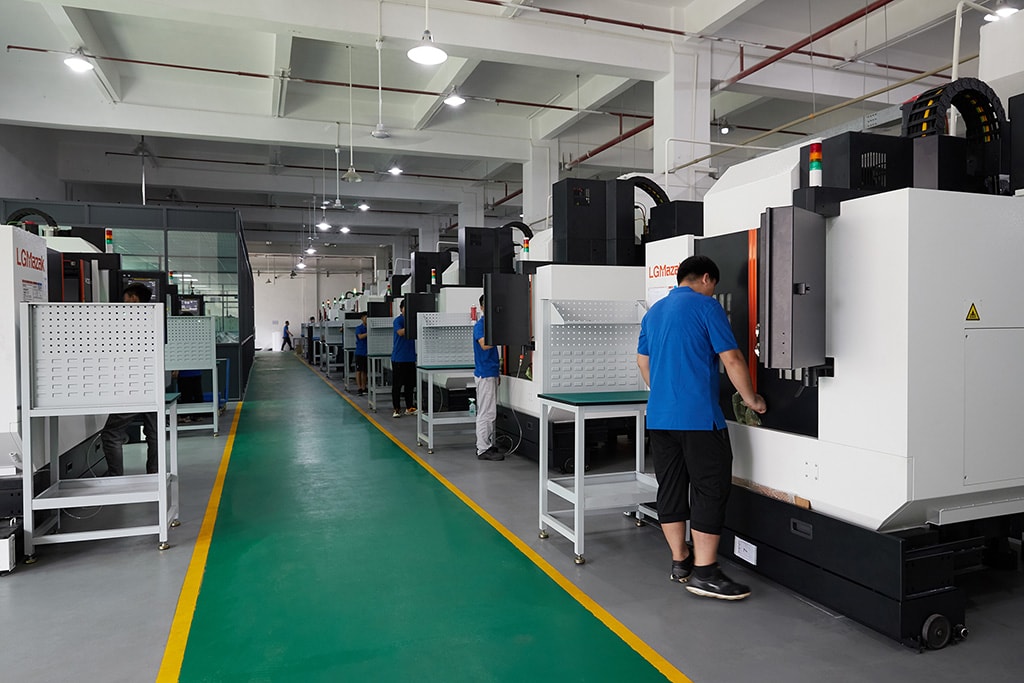
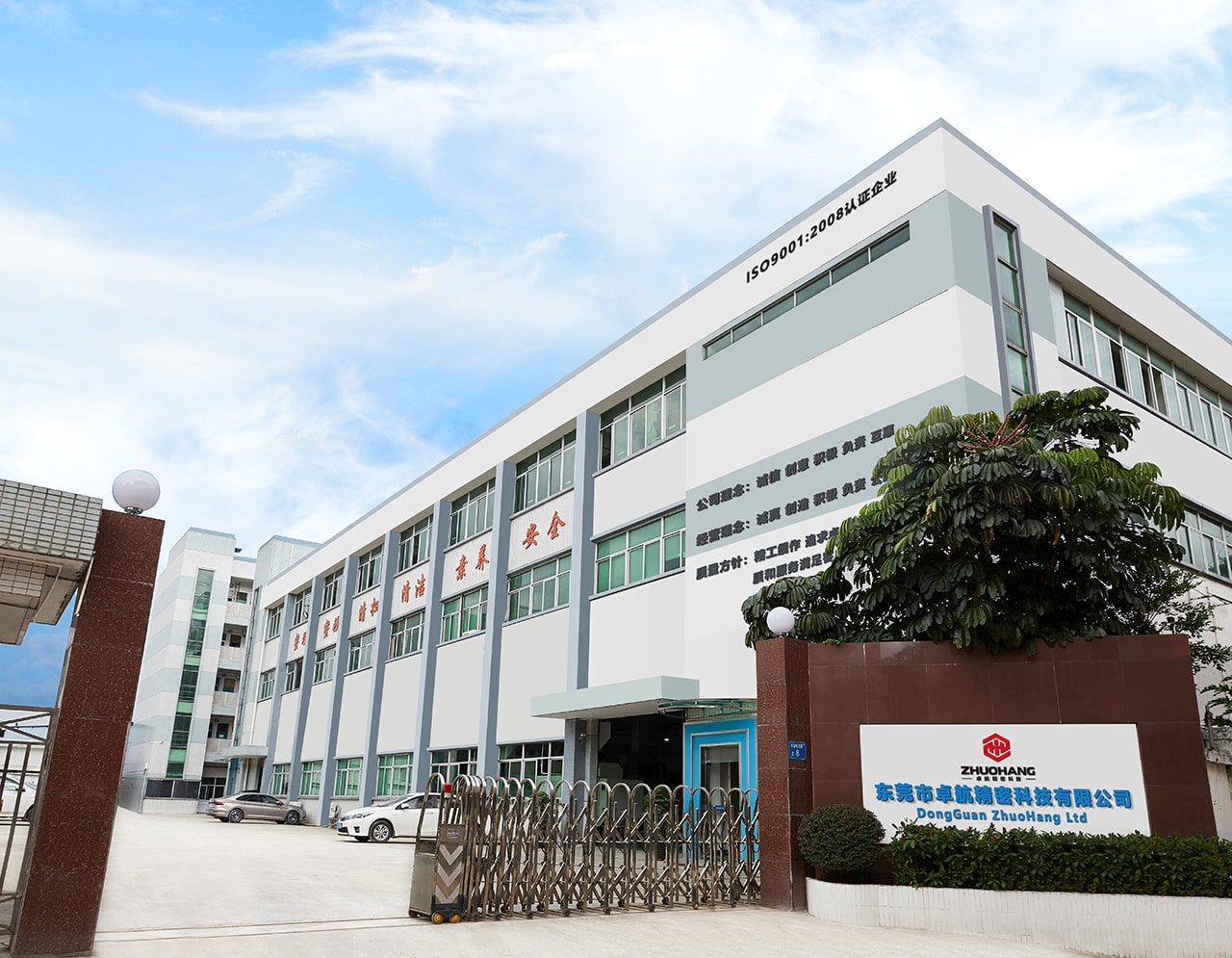
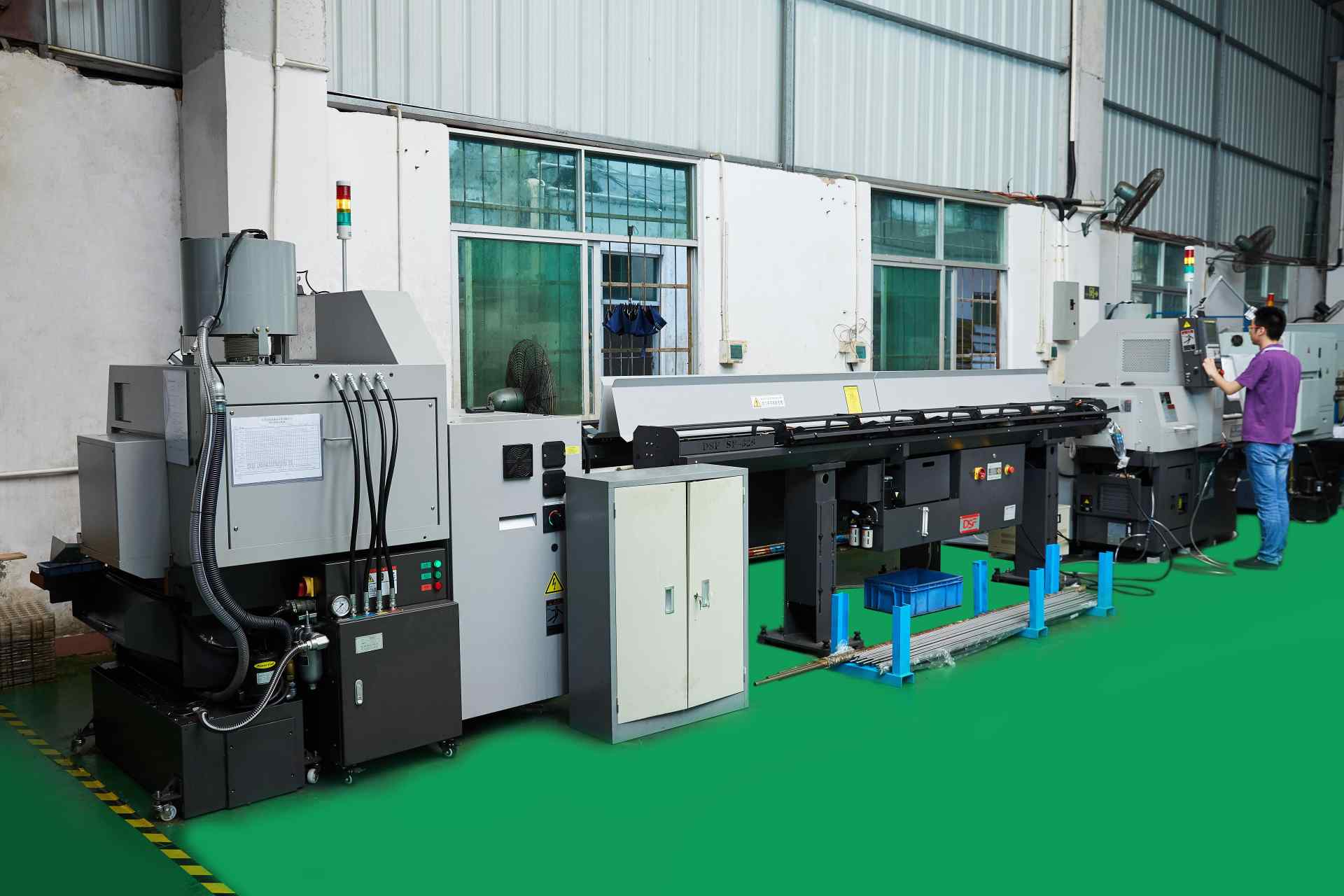
If you ask for capability evidence, you deserve a specific answer. This facility operates 100+ CNC machines across 6,800 m2 in Dongguan, China, staffed by 100+ people. The machines, listed by category:
- 5-axis machining centres (10+) - Mazak VARIAXIS I-600 (510/910/510 mm travel, 12,000 rpm, 22 kW, 71.6 N·m, 30-tool BT40) and Mazak INTEGREX I-250H S (B-axis 0.0001°, 24 kW, 124 N·m, 38-tool HSK-A63). Matched to compound-angle parts, single-setup multi-face prismatic work, and aerospace fittings where datum transfer loss is unacceptable.
- 3-axis / 4-axis machining centres (50+) - Brother SPEEDIO S500Z2N / S700Z2N (10,000 rpm, 14/21-tool ATC, 0.7 s tool-to-tool, Z-axis 2.2 G) and Mazak VCE-430A L / VCE-570C L (10,000 rpm, 118 N·m, 24-tool ATC). Matched to prismatic parts, plates, brackets, housings.
- Swiss-type turning centres (10+) - Citizen Cincom A20-3F7 (Φ20 mm, 10,000 rpm), TSUGAMI B0206-III / B0205-III (Φ20 mm, 0.1 µm), STAR SR-32JII / SR-32J Type N (Φ32 mm, 8,000 rpm). Matched to long, slender rotational parts at ±0.002 mm.
- CNC turning centres (20+) - HEADMAN T70M/1250 (720 mm swing, 117 mm bore, 3,000 rpm, BMT75 12-station turret). Matched to shafts, bushings, flanges up to ±0.002 mm.
- Wire EDM (5+) - Sodick AQ535L (550/350/300 mm travel, ±20° taper, 800 kg workpiece). Matched to hardened tool steel, internal splines, sharp internal corners that milling cannot reach.
- Inspection: Hexagon CMM + 20+ gauges - Hexagon CMM for coordinate measurement, plus vision system, profilometer, hardness tester, coating thickness gauge, XRF for material verification. The 10:1 rule (gauge 10x more accurate than the band) is applied to every feature.
- Machine highlights - VARIAXIS I-600: one-setup multi-face 5-axis + MAZA-CHECK auto-calibration; INTEGREX I-250H S: DONE-IN-ONE mill-turn, B-axis 0.0001° + Ai thermal shield; SPEEDIO S500Z2N / S700Z2N: Z-axis 2.2 G + 0.7 s ATC; Swiss-type: guide-bush switchable + 0.1 µm resolution.
Tolerance bands: ±0.003 mm milled, ±0.002 mm turned, ±0.002 mm ground or wire-cut. Capability indices: Ppk >= 1.67 at the initial study; Cpk >= 1.33 ongoing in production.
Certifications: ISO 9001:2015 (116024/A/0001/UK/En) · IATF 16949:2016 (131941/A/0001/SM/En, design clause 8.3 excluded) · ISO 14001:2015 (116024/B/0001/UK/En), held by Dongguan Zhuohang Ltd (USCC 91441900MA4UWT6X39, since 2005).
Service area: we supply Austria, Belgium, the Czech Republic, Denmark, France, Germany, Greece, Hungary, Ireland, Italy, the Netherlands, Spain, Sweden and the United Kingdom in Europe; Brazil, Canada, Mexico and the United States in the Americas; China, Israel, Japan, Singapore and Sri Lanka in Asia; Australia and New Zealand in Oceania; and South Africa in Africa, with worldwide delivery from China.
Contact: Felipe Iglesias, [email protected], +86 13126536955.
Ready to machine your parts?
Send your drawing to [email protected] or call +86 13126536955 for a quote.
Frequently Asked Questions
Who is the entity behind the factory?
In short, Dongguan Zhuohang Ltd, brand Zhuohang Precision Machining Factory, founded 2005 at No. 8, Shuibian Songyuan Road, Hengli Town, Dongguan, Guangdong, China 523470, with 6,800 m² and over a hundred machines that keep lead times short.
What certificates does the factory hold?
In short, ISO 9001:2015 (116024/A/0001/UK/En), IATF 16949:2016 (131941/A/0001/SM/En), and ISO 14001:2015 (116024/B/0001/UK/En), under Dongguan Zhuohang Ltd; IATF 16949 excludes design under Clause 8.3, a build-to-print manufacturer stated honestly.
How does capacity make lead times fast?
100+ machines across 6,800 m² let a job route to the first open machine that fits it, and multiple jobs run in parallel. A real plant schedules its work, while a small shop queues, and the queue is where lead times die.
How does the factory take a part to production?
The same floor runs a prototype at one piece, a pilot at low volume, then production at volume. The machines and process do not change, so the lead time you measured on the prototype is the lead time you get at volume.
What machine brands run on the floor?
Mazak, Brother, Citizen, Star, and Tsugami machines give the parallel capacity that keeps a prototype from queuing behind production work, so a lead time stays tight.
What is the largest workpiece the factory can machine?
Milling goes to 1300 × 700 × 600 mm and turning to Ø720 × 1280 mm, at ±0.002 mm and ±0.002 mm (grinding) — an envelope that keeps most prototypes on a single machine.
Standards referenced on this page
- ASTM A582/A582M-12 — Standard Specification for Free-Machining Stainless Steel Bars
- ISO 14001 — Environmental management systems — Requirements with guidance for use
- IATF 16949:2016 — Automotive quality management system standard