
Medical Rapid Prototyping in China: Materials, Documentation, and Tolerance Expectations That Survive Every Iteration
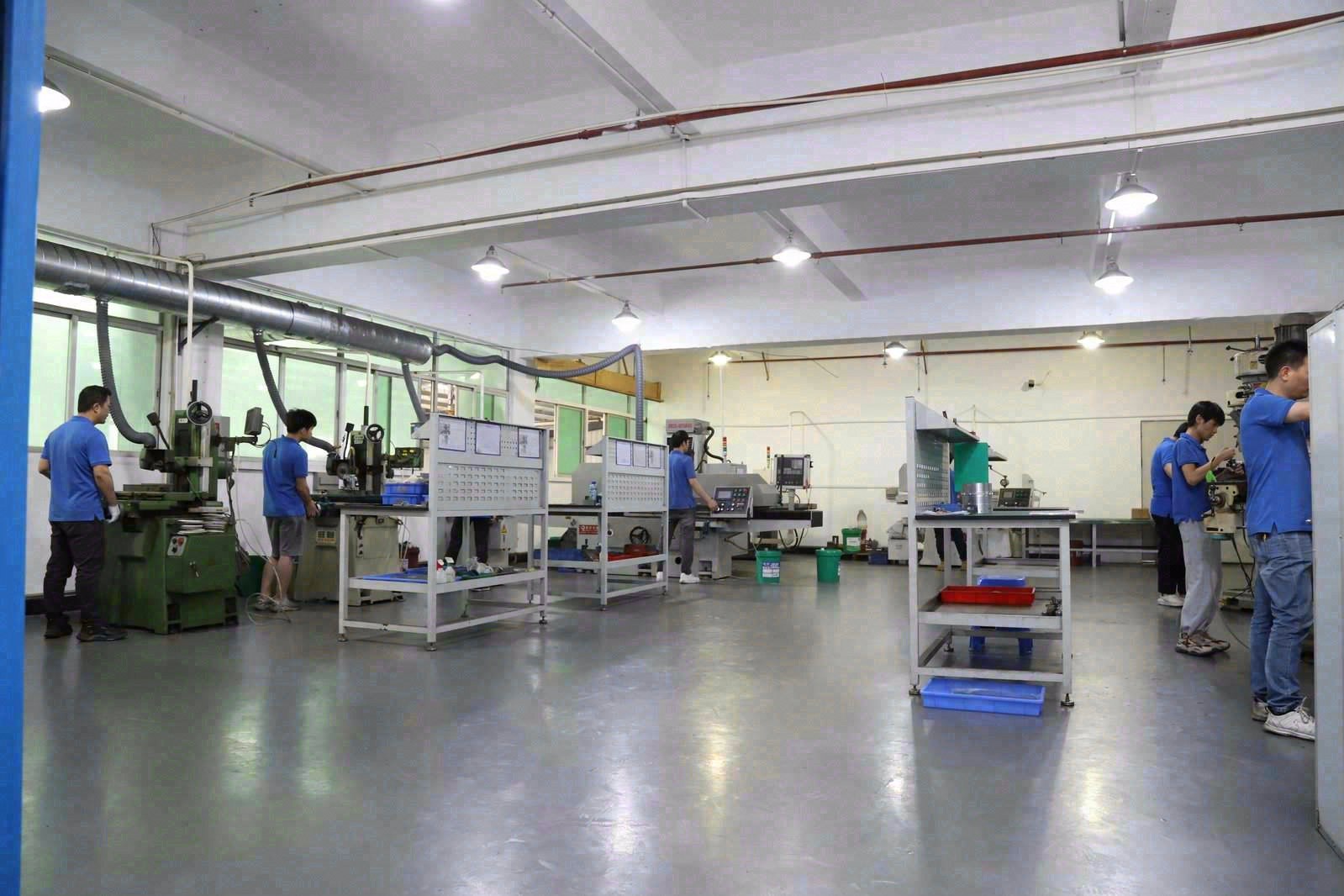
Rapid prototyping exists to turn a drawing into a decision in days, and on a medical device program every one of those decisions lands in a design-history file. The prototype you order this week is not just a part — it is the first evidence trail for a device that will one day be audited, and every iteration that follows either strengthens that trail or quietly breaks it. That is why medical rapid prototyping carries a different expectation set from a consumer-electronics prototype: the material has to arrive with a state you can name, the tolerance has to be held by a process you can prove, and the documentation has to be produced per iteration, not reconstructed at the end. This guide sets those three expectations — materials, documentation, and tolerance — on the rapid-prototyping timeline: what each round of a fast, low-volume medical prototype should carry, so the design that reaches validation is already supported by the records it needs.
Why does a medical prototype carry a heavier expectation burden than the same part in any other industry?
A prototype in most industries proves geometry, then gets thrown away. A medical prototype does double duty: it proves the geometry, and it begins the documentation that will follow the design into production and beyond. Medical device makers keep design-history files for years, and the evidence that ends up in that file is not written at the end — it is accumulated from the first prototype onward. A supplier that machines a single prototype with a material certificate, an XRF verification against it, and a first-article record has given the device maker a usable start to that file. A supplier that ships bare parts has forced the device maker to start the evidence trail from zero later, when the memory of which material and which process produced the part has already faded.
The stakes change what "fast" means. On a rapid-prototyping schedule, the 3 / 7 / 30-day tiers are about machining time, but for a medical part, the schedule has to include the time to produce the records that travel with the part. A medical prototype that arrives in three days without its material state and inspection records has arrived incomplete; the machining was fast, but the evidence the device maker needed is missing and must be chased. The practical rule is simple: on a medical order, the documentation is part of the deliverable, and the supplier should say what records ship with the part before the order is placed, not after.
Which material expectations should a medical rapid prototype carry in each iteration?
Medical prototypes run the same materials as any precision job — aluminum, stainless, titanium, engineering plastics — but the expectation is not the alloy alone. It is the alloy with its condition, verified at receiving, and traceable to the part. Three expectations matter on every iteration:
- Name the grade and the condition, never a family name. "Stainless" and "titanium" are not specifications on a medical drawing. Write 316L or 17-4 PH or Ti-6Al-4V, and name the condition — annealed bar, aged to a range, ELI grade where implant-adjacent work demands it. The condition sets the machining behavior and the finished properties, and it is the first thing a design-history file records about the material.
- Verify the material against its certificate at receiving. The factory behind this site XRF-checks every incoming lot against its mill certificate before any bar is cut — the same check applies whether the order is one prototype or a production run. On a medical part this is not bureaucracy; it is the link that lets a dimensional report mean something, because no measurement can see a substituted alloy. Ask for the verification record with the first prototype, not with the thousandth part.
- Keep the material expectation stable across iterations. The whole point of a prototype-to-production path is that the production part behaves like the tested prototype. If iteration one runs 316L annealed and iteration three runs cold-worked bar, the material changed without a drawing revision. Each prototype should name the material state it was cut from, so the trail from the first prototype to the released part is continuous.
The boundary belongs in the same sentence: a machine shop verifies the material, the machining, and the documentation — it does not certify biocompatibility. That judgment belongs to the device manufacturer under standards such as ISO 10993. What the buyer should expect from the shop is a named, verified, traceable material state on every prototype, so the device maker's own biocompatibility work starts from a known alloy.
Which tolerance expectations belong on a medical prototype, and which should wait for validation?
Any engineer's first reaction to a medical drawing is to tighten every number on it, because the imagined cost of a missed dimension feels catastrophic. The reaction that produces better prototypes is the opposite: ask which features this particular round exists to test, put the tight callouts there, and let the rest ride a sensible general tolerance. The tolerance expectation follows the purpose of the iteration, not the medical label printed on the part:
- Functional features that the iteration must validate carry the tight callouts. A bore that receives a mating shaft, a sealing face, a hole pattern that locates a component — these are where ±0.003 mm milling-and-turning tolerances are held, with precision-ground features such as seal faces and reference surfaces taken to ±0.002 mm. These are the features that get measured on the first article, and the measurement report is part of what the iteration proves.
- Features that only production will exercise can wait. If a tolerance exists to guarantee long-term fatigue or wear behavior that a prototype cannot test anyway, tightening it in the prototype adds machining and inspection time without adding learning. A capable shop will tell a buyer when a callout is tighter than the feature needs, that pushback is the sign of a supplier reading the drawing, not the sign of one avoiding work.
- The tolerance is a process claim, not a single measurement. A first article that measures inside tolerance proves the process was right on that day. The expectation that matters across a medical program is process stability — Cpk at 1.67 or higher on key characteristics — which a rapid-prototyping order at low volume can demonstrate on the features that matter, and which production will track through the run. Ask what the supplier's process-capability record shows, not only what the first article measured.
One further point deserves attention, because it is where many medical prototypes quietly change size after the machine stops. A feature that is machined to dimension and then aged, anodized, or plated will not come back at the size it left the cutter. The tolerance on a medical drawing is a finished-part tolerance, and the shop's plan for compensating the finishing step is part of what the buyer is paying for, whether the order is one piece or a production run.
What documentation should every medical prototype iteration actually produce?
Documentation on a medical rapid-prototyping order is per-iteration, not per-program. Each round of the prototype — revision A, revision B, the pre-validation sample — should produce its own coherent record set, sized to the iteration but always self-describing. The practical set runs like this:
- Material certificate tied to the lot, verified at receiving. The certificate's lot number matches the batch record for the parts in that iteration, and the XRF verification record sits behind it. This is the record that answers "what metal is actually in this prototype", and it is the one that catches substituted material years later, when a field question arrives.
- First-article inspection with the measurement method named. The first part of each revision is measured against the drawing, and the report names the drawing revision, the material, the inspector, the date, and the measurement temperature. A report that can be understood by someone who was not in the room when the part was made is a record that will survive into the design-history file.
- Process-capability evidence on the features that matter. Even at prototype volumes, a shop should be able to show SPC data on the critical characteristics — Cpk at 1.67 or higher — rather than a single heroic measurement. The factory behind this site, for example, records process capability on its key characteristics and can show the record on request.
- Finishing and cleaning records where the drawing calls for them. Passivation, electropolish, heat treatment, and ultrasonic cleaning each produce their own logs. A medical prototype that is passivated but carries no passivation record has not actually documented its finished surface state, and the finishing step is where a silent process change becomes a new part wearing an old number.
Each iteration's documents should describe the same part, the same revision, and the same lot. Lot-level consistency across every record is the check that catches substituted material and drifted processes, because a dimensional report cannot see a wrong alloy, but a material certificate with a lot number that does not match the batch it accompanies is a visible red flag.
How do you keep the evidence chain intact as the prototype ramps toward production?
Rapid prototyping earns its name by moving parts fast, but a medical program earns its release by keeping the evidence continuous from the first prototype to the production run. The handoff between the two is where most medical documentation chains break, and it breaks in predictable places:
- The material must not change silently. A prototype cut from one bar of 316L and a production run cut from a different supplier's stock are the same material only if the certificates say so and the receiving verification confirms it. Every material source change is a new evidence event — new certificate, new XRF check, fresh confirmation that the finish assumptions still hold.
- The process must not change without notice. New tooling, a different machine, a different fixture — any of these can change how the part machines and therefore what it measures. The expectation worth holding is that the supplier notifies the buyer before a process change touches a released part, and that each revision is accompanied by updated first-article documentation.
- Change notification must be written into the order. On medical work, silent process changes are the failure that paperwork cannot catch after the fact, because the parts that shipped already went into the device. The supplier should agree to say something before a process change touches a released part, and the buyer should agree to respond.
The good news is that rapid prototyping is the natural place to build this chain. Because the factory behind this site runs prototypes and production on the same floor — MOQ of one piece up to full production runs — the process knowledge from the first article does not get lost when the job is handed to a different shop. The people who learned your part during prototyping are the same people who run it at volume, and the evidence trail is continuous rather than reassembled. The rapid prototyping in China guide on this site walks the full prototype-to-production schedule logic; the rapid prototyping quality process page explains how parts are measured and documented at every step.
How do you write the expectations into a medical prototype RFQ?
A medical prototype RFQ earns an honest quote when it pairs every expectation with the check that proves it. The structure is simple: state the requirement, state the verification, and state the document that records the result. Three paired statements carry the load in the inquiry:
The material statement. The full designation and condition — 316L annealed, 17-4 PH aged to H900, Ti-6Al-4V ELI — never a family name, plus the document that proves it: the mill certificate, verified by XRF at receiving, with the lot recorded in the batch file.
The tolerance statement. The functional features and their tolerances, with the verification named — a CMM report on the first article of each revision, SPC evidence at Ppk ≥ 1.67 at the initial study on the key characteristics, and a stated convention for whether critical dimensions are pre-coat or post-coat when finishing is involved.
The documentation statement. The record set each iteration must ship with — material certificate, first-article report, SPC evidence, finishing and cleaning logs — so the quote includes the cost of producing it and the supplier builds it into the process rather than assembling it after the fact.
Reading a returned quote against those three statements separates a real shop from a page on the internet. A quote that shows the material certificate, the inspection, and the finishing as priced line items understands what medical prototyping requires. And a shop that comes back with questions — what the part does, how it is cleaned, which records the design file will hold — is tuning its process to your device rather than quoting from a template. That behavior, more than any equipment list, is the signal that documentation is treated as part of the product.
Frequently Asked Questions
Do I need a supplier with ISO 13485 to machine medical prototypes?
ISO 13485 is aimed at the medical device manufacturer who designs and releases the finished product, not at the contract shop cutting a component to someone else's print. A build-to-print machining supplier runs ISO 9001 with medical-specific work instructions as its operating base. This factory carries ISO 9001:2015 (116024/A/0001/UK/En), IATF 16949:2016 (131941/A/0001/SM/En, with product design excluded under Clause 8.3), and ISO 14001:2015 (116024/B/0001/UK/En). Behavior is the test: incoming material verification, change notification, non-conformance handling, and a documented workflow for medical orders.
How much documentation does a single medical prototype really need?
Enough to be self-describing: a material certificate tied to the lot and verified at receiving, a first-article inspection report naming the revision, the material, and the measurement method, and finishing records if the drawing calls for them. The records should describe the same part, the same revision, and the same lot, because consistency is the check that catches substituted material.
Can I prototype in aluminum and then produce in stainless for a medical device?
For geometry, yes — an aluminum prototype is a faithful answer to form, fit, and assembly questions. For machining behavior and material response, no. A stainless medical part that will be passivated and cleaned needs its first stainless parts cut in stainless, because aluminum cannot expose how 316L will machine, passivate, or respond to cleaning chemistry. Prototype in the production material once the design is stable.
Should every tolerance on a medical prototype be held to ±0.003 mm?
No. Tight tolerances belong on the features the iteration must validate: mating bores, sealing faces, locating hole patterns. Milling and turning hold ±0.003 mm and precision-ground features reach ±0.002 mm, but tightening cosmetic or non-functional surfaces only adds inspection time and cost. A capable shop will tell you which callouts are tighter than the feature needs.
What does "material condition" mean, and why should I specify it on a prototype?
Condition is the metallurgical state of the material when it reaches the machine — for 17-4 PH, for example, that means cutting it in the annealed condition and then precipitation-hardening to a named range such as H900 or H1150, as opposed to shipping it still annealed. The condition drives strength, corrosion performance, and how much the part moves in heat treatment. Specifying it on the prototype is what lets the production part be made to match.
Why does the material certificate matter if the prototype measures correctly?
Measurements alone cannot expose a wrong alloy. A part cut from the wrong grade can clear every dimensional check and still fail once it is in service — corroding where the specified material would not. The mill certificate connects the exact bar or lot that was machined to the XRF verification done at the receiving dock, so the grade named on the drawing is the grade inside the prototype. That linkage is what makes a dimensional report meaningful on a medical part.
Can a fast prototype schedule and a complete document set coexist?
Yes, when the documentation is produced by the process rather than assembled afterward. Material certificates, XRF checks, first-article reports, and finishing logs are generated as the part moves through the floor; producing them does not slow the machining. What slows a medical order is documentation that has to be reconstructed after the fact, which is why the record set should be named before the order, not negotiated after the parts exist.
Have a medical prototype where the material state, the tolerance plan, and the per-iteration records need to line up before the first part is cut?
State the prototype's goal and the documentation you expect on each round; reach [email protected] or +86 13126536955 and the response will set out the delivery tier, the alloy checks, and the record list accompanying every iteration.