
Every rapid prototyping supplier promises speed, but speed is not one thing — it is the sum of a review that must happen before cutting, a machining time that belongs to the geometry, a finishing step that runs on its own schedule, an inspection that proves the part, and a courier flight that carries it across the world. A supplier can be rapid at machining and slow at review, or fast at the quote and glacial at finishing, and the word "rapid" tells you nothing about which parts of the calendar are actually fast. This guide reads a rapid prototyping lead time from China the way a program planner reads it — stage by stage — so a buyer can tell a genuinely quick service from one that is rapid only in the parts of the process the customer can see.
What does rapid actually promise on a real calendar?
Rapid promises that the total elapsed time — from the moment you send the file to the moment the part lands on your bench — is compressed, and the compression has to come from somewhere in the chain. The total is not the machining time; it is the review time plus the machining time plus the finishing time plus the inspection time plus the transit time, and a supplier that calls itself rapid should be able to show you where the compression lives in each stage. Ask for the elapsed time broken into those pieces for your part, and compare the breakdown against the word. A supplier whose rapid claim is built on a fast quote but a standard review, or a fast machine but a weekly finishing run, is rapid in the visible stage and ordinary in the hidden ones, and your calendar will be written by the hidden ones.
The compression also has a floor set by physics and logistics. Machining a geometry takes the minutes the toolpath needs; a finishing run starts when the batch starts; a courier flight departs on its schedule and clears customs on its own. No supplier can compress those below their natural limits, and a rapid promise that ignores the floor is a promise that will be broken. The honest rapid supplier tells you which stages it has genuinely compressed — the review that happens while you sleep, the machine window held open for your part, the finishing scheduled against the machining — and which stages are governed by the calendar it cannot control. The buyer who hears that breakdown is the buyer who can plan on the real number rather than the marketing one.
What drives the review stage, and how fast can it really run?
Before a prototype is machined, someone must review the file — check the geometry against the process, confirm the material, flag the features that will be hard to hold — and the review is the first gate on the calendar. Ask how the review is staffed and how long it takes: a supplier whose engineers review models within hours, often on a schedule aligned to a buyer's time zone so the review happens overnight, has built the review into its rapid claim; one whose review waits for a daily batch or a specific engineer has a review that runs on its own clock. Ask what the review produces — the DFM notes, the process confirmation, the go-ahead — and whether it can be skipped for a part that has run before. The review is the stage where a rapid supplier can genuinely out-run an ordinary one, and the buyer who asks about it is the buyer who sees where the speed is real.
The review is also where the calendar can be lost before machining even starts. A review that finds a problem in the file sends the order back to you for a decision, and the round trip — your email, your fix, your resend — is calendar time that belongs to neither of you cleanly. Ask how the supplier handles a review that finds an issue: does it flag it and wait, or flag it with a recommendation and a planned fix so the decision is quick? A supplier that returns a flagged issue with a suggested correction is compressing the review loop; one that returns the problem without a recommendation is handing you back the calendar. The review stage's real speed is measured in how quickly a problem becomes a decision, not in how quickly a clean file becomes a go-ahead.
How does the machining stage scale with the geometry?
The machining time belongs to the geometry, and the rapid supplier's advantage is in how it schedules that time rather than in denying it. Ask which machine class will run the part, how the machining time breaks down by feature and what the realistic cutting estimate is for the geometry you sent. Ask whether the supplier holds machine capacity for rapid work — a window that can take a prototype tomorrow rather than next week — or whether your part joins a production queue. The supplier that schedules prototypes ahead of its production work is selling rapid as a scheduling priority; one that lets prototypes wait behind production is selling rapid as a hope. The buyer who asks about the machine window is the buyer who knows whether the machining stage of the calendar is real or aspirational.
The material choice interacts with the machining stage in both directions. A prototype in a stocked aluminum or stainless grade can start cutting immediately; a less common grade carries a material lead that enters the calendar before the machine. Ask which materials the supplier holds for rapid work and how the machining estimate changes with the grade — the material that machines fast is the material that makes the rapid calendar, and the buyer who designs the prototype around stocked grades is the buyer who keeps the machining stage short. The material line of the rapid calendar is the line the buyer controls most directly, and choosing the stocked grade is choosing a shorter calendar.
Why is finishing the hidden wait on a rapid calendar?
The finishing stage is where rapid prototypes most often lose their speed, because finishing runs on processes that have their own cadence. An anodize job may run daily or twice a week; a coating or a treatment may be a partner's schedule; and a prototype that needs finishing waits for the next run even when its machining was finished in hours. Ask what finishing your prototype needs and what the finishing cycle is: how often the anodize line or the coating run operates, when your part would join it, and whether the finishing can be scheduled to start as the machining finishes. A supplier that overlaps the finishing against the machining has compressed the calendar; one that finishes in sequence after the machine has added a full cycle to the lead time. The finishing stage is the place where the buyer who plans the finish callouts against the supplier's cadence keeps the calendar short.
Ask whether finishing can be deferred on a prototype that does not need it. A functional prototype that will be redesigned does not need the anodize that a customer-facing model does, and skipping the finishing removes a whole stage from the calendar. The supplier that advises you when the finish is unnecessary is a supplier that is managing your calendar; one that applies its standard finish to every prototype is adding a cycle you may not need. The finishing decision is a calendar decision, and the buyer who makes it deliberately — finishing where the test needs it, skipping where it does not — is the buyer whose rapid prototype actually arrives rapid.
What does the inspection and documentation gate add before shipping?
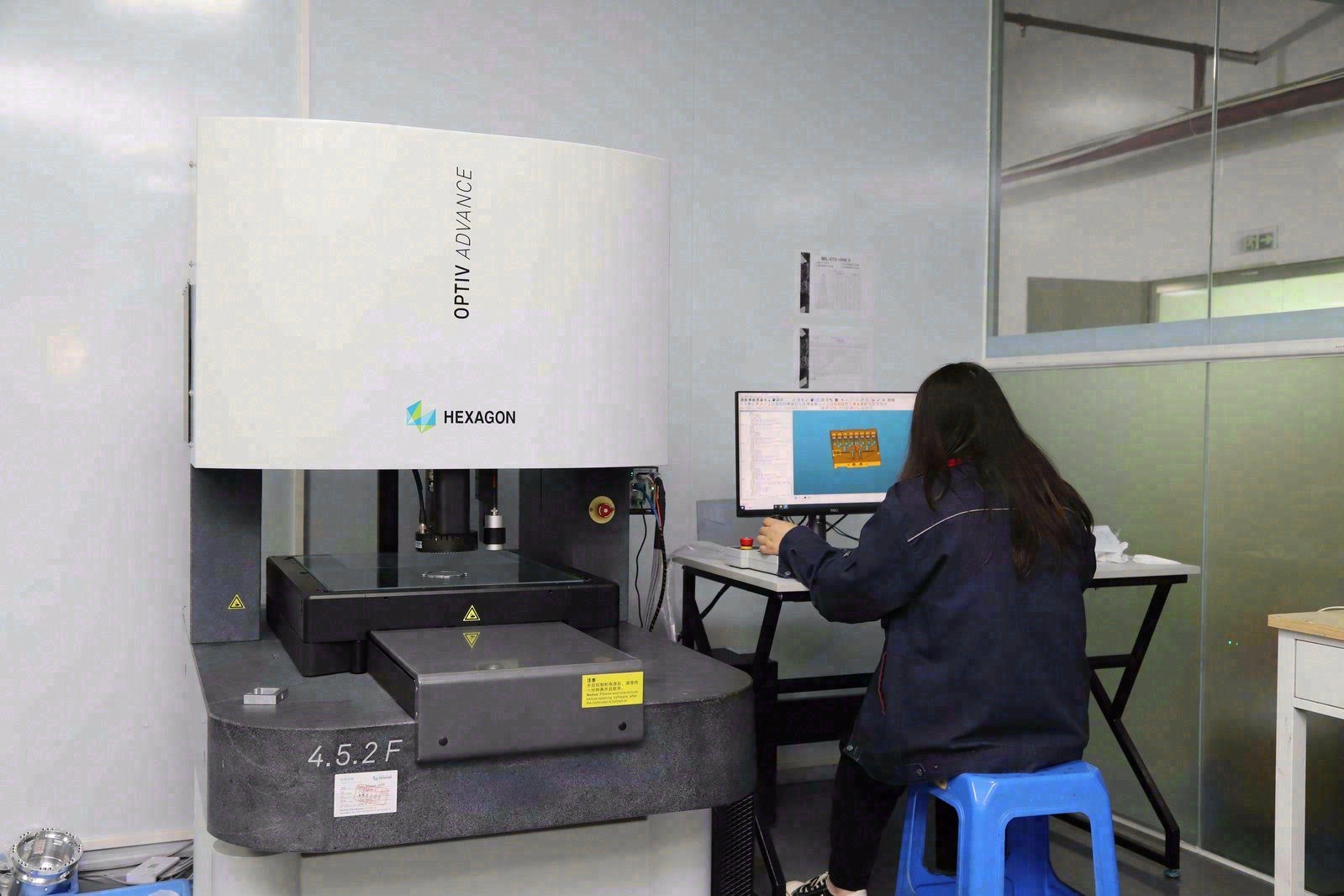
Before a prototype ships, it should be inspected — the critical features measured, the report produced — and the inspection is a small stage with a calendar of its own. Ask what the inspection covers on a rapid prototype and how long it takes: a first-article check on the features that matter, measured on the instruments that can resolve them, with the report generated before the part leaves. Ask what the report contains and whether it ships with the part or behind it, because a prototype that arrives without its report arrives without its evidence, and the evidence is what tells you whether the test you are about to run is meaningful. A supplier whose inspection is fast and whose report travels with the part has kept the documentation inside the rapid calendar; one whose inspection waits or whose report follows has let the evidence lag the part.
Ask what happens when the inspection finds a feature out of band. On a rapid prototype the honest answer is a decision loop: the supplier flags the deviation, explains what it means for the test, and either ships with your approval or re-cuts quickly. A supplier that ships the deviation without telling you is corrupting your test data; one that re-cuts silently is protecting its delivery record at the cost of your schedule. The inspection gate is where the rapid supplier's honesty meets its speed, and the buyer who asks what happens at the gate is the buyer who knows whether the rapid part that arrives is the part the report describes.
What is the real transit picture for a prototype leaving China?
The last stage of the rapid calendar is the one no supplier controls alone: the courier flight and the customs clearance between the factory and your bench. Ask which shipping method the rapid promise assumes and what the realistic door-to-door transit is — the courier pickup, the flight, the clearance on your side and the final delivery — because the transit is often several days of the total and it is the stage where the calendar is most exposed. Ask whether the supplier quotes a delivered date or a shipped date, and what its experience is with the customs step at your destination. A supplier that tells you the delivered picture honestly is a supplier whose rapid promise you can plan on; one that quotes a ship date and calls it delivery is leaving the exposure to your discovery.
The time-zone geometry works in your favor on this stage, and a good China supplier uses it deliberately: the review happens while you sleep, the machine runs while you work, and the part is on a courier before your morning has started. Ask how the supplier's schedule is aligned to your time zone — whether the overnight review and the early pickup are part of its rapid service or accidents of its location. The buyer who works the time-zone advantage — sending files at the end of its day so the review and the machining happen overnight — is the buyer who has found the compression that exists in the calendar's natural geometry rather than in any supplier's promise.
How do you plan a rapid prototyping program on the real calendar?
Plan the program on the breakdown, not on the word: the review time at the agreed time-zone alignment, the machining time for the geometry, the finishing cycle if the finish is needed, the inspection gate and the courier transit. Then add the buffer where the calendar can slip — between the promised delivery and your hard deadline — because the courier and the customs are genuinely variable and the buffer is where the variation lands without becoming a crisis. A rapid program planned with a buffer is a program that can absorb a flight delay; one planned to the last hour converts every small slip into an emergency. The buyer who plans the prototype program on the calendar's parts is the buyer who is not surprised when the parts behave like a calendar.
Contract the program with the iteration cadence in mind, because a rapid prototyping program is usually several rounds. Ask what the cadence is for a revision: how quickly a changed file is reviewed, re-quoted and scheduled for the next round, and whether the supplier's rapid machinery applies to the second round as well as the first. The buyer who plans the whole program — round one, the revision, round two — against the supplier's cadence is the buyer who knows how many calendar days the full convergence will take. The rapid promise that matters is not the speed of one prototype; it is the speed of the whole iteration loop, and the supplier whose cadence carries the loop is the supplier whose rapid claim is worth planning on.
Which signs mean the rapid calendar is not what it claims?
Doubt the claim when the supplier cannot break the lead time into its stages, because a rapid number with no breakdown has not been computed — it has been chosen. Question the rapid promise that ignores the finishing cycle, the inspection gate or the courier transit, because a calendar that omits its own stages is a calendar that will reveal them. Be wary when the review is not staffed to your time zone, when the machine window is not held for prototype work, and when the delivery promise is a ship date wearing a delivery date's clothes. And treat a supplier whose revision path is slower than its first-order path as a supplier whose rapid service is a first-impression product, because the iteration — the second round and the third — is where a prototyping relationship actually earns its keep.
Test the rapid claim with a first order whose calendar you can verify stage by stage. Send a part with a known geometry, ask for the breakdown at the start and check each stage as it completes: the review on time, the machine window held, the finishing on its cycle, the inspection report attached and the courier on the quoted lane. If the stages land as broken down, the rapid promise is a real calendar and the next prototype can be planned on it with confidence. If a stage slips — the review waited a day, the finishing missed a cycle, the "delivery" was a ship date — you have learned which stage of the calendar is not rapid after all, and the next program will be planned around the lesson rather than around the word.
Frequently Asked Questions
What does rapid really promise on a lead-time calendar?
That the total elapsed time — review plus machining plus finishing plus inspection plus transit — is genuinely compressed. Ask for the breakdown by stage and compare it against the word, because a rapid claim is only as real as the stages it has actually compressed.
How fast should the review stage run?
In hours, often aligned to your time zone so the review happens overnight. Ask whether the review is staffed and scheduled for speed, and how a review that finds a problem becomes a decision — a recommendation with the issue compresses the loop.
How does the machining stage stay rapid?
Through a held machine window for prototype work and a stocked material choice. Ask whether prototypes are scheduled ahead of production and which grades are held in stock, because the material and the window decide the machining stage's place on the calendar.
Why is finishing the hidden wait on a rapid calendar?
Because finishing runs on its own cadence — an anodize line, a coating run — and a part misses a cycle waits for the next. Ask the finishing cycle and whether it can overlap the machining, and whether a prototype that does not need the finish can skip the stage entirely.
What should the inspection gate add before a prototype ships?
A fast check of the critical features with the report traveling with the part. Ask what is measured and what happens when a feature is out of band — flag it for your decision or re-cut — because the gate is where the supplier's honesty meets its speed.
What is the real transit for a China prototype?
The courier pickup, the flight, the customs clearance and the final delivery — often several days of the total. Ask for the delivered picture, not the ship date, and work the time-zone advantage so review and machining happen overnight.
How do I plan a rapid prototyping program?
On the stage breakdown with a buffer before your hard deadline, and on the revision cadence for the whole iteration loop. The rapid promise that matters is the speed of the whole loop, not the speed of one prototype.
Planning a rapid prototype and want the calendar broken down stage by stage?
Send the file and the deadline to [email protected] or call +86 13126536955 and ask for the review, machine, finish and freight times separately. See the quality page for the inspection gate and the factory page for the machines behind the rapid claim.